Is friction a feature?
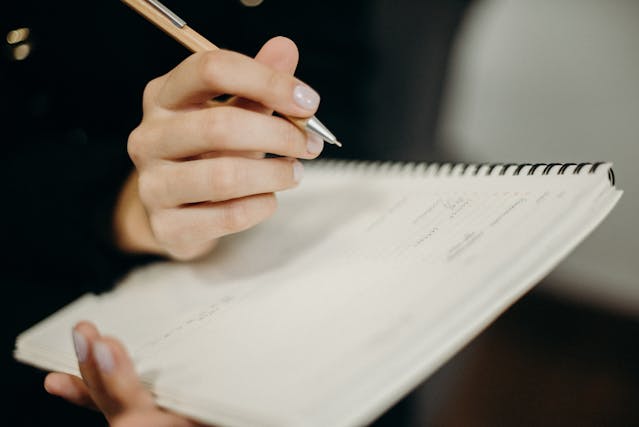
Infinite battery life, but no search function. (Photo by cottonbro studio: https://www.pexels.com/photo/person-writing-on-notebook-3201466)
I have spent the better part of the last half decade trying to optimize my "second brain".
I have migrated from Evernote to Google Docs to Notion to Obsidian and then to a custom markdown solution synced via git that I wrote a script to manage. I've spent hours tweaking themes, configuring plugins and organizing folder structures. I convinced myself that the friction I felt in capturing ideas was a software problem. If I could just find the right hotkey combination, my thoughts would flow seamlessly into digital permanence.
Last month, as I was coming out of a pollution caused throat episode, out of frustration with a sync conflict, I picked up a spiral-bound notebook from a local stationary store. It cost me ₹40 (about 0.50 USD). I rediscovered the most performant writing operating system in existence.
If we analyzed paper like we analyze tech stack, it would look ridiculous:
- Boot time is instant, i.e. 0ms.
- Low latency and limited only by the physics of my hand.
- Infinite resolution
- Battery life is in decades.
- Privacy? Well air-gapped by default.
The problem with digital tools is that they are way too forgiving. When I type in a text editor, I am constantly editing. I write a sentence, backspace, rewrite, delete or rephrase. The backspace key is a crutch. It allows me to think while I type. Paper has no Ctrl+Z. This sounds like a bug, but it is actually a feature for me.
When I write with a pen, I'm forced to buffer the thought in my brain's RAM before I commit to the I/O (the paper). I have to structure the sentence before I execute the hand movement, kinda like on a test, in school. This forces a higher quality of thought, is such a thing exists in the ether.
Digital tools encourage me to become librarian of my own life rather than a writer. I used to obsess over tags, backlinks and graph views. I felt productive because I was organizing information, not because I was necessarily synthesizing it. In my notebook, there are no tags. There is no search. I can't train a local LLM on it even if I wanted to. If I want to find something I wrote three weeks ago, I have to physically flip through the pages and re-read my old thoughts. This inefficient random access forces spaced repetition. I actually remember what I wrote because I have to look at it again. If I have to share something with someone on a different continent, I either have to type it out by referencing this or I click a photo and send it away.
This is not me trying to dunk on people, way smarter than me by the way, who use the tools I mentioned to organize and beautifully strcuture their thoughts. And no, I am not swearing off technology either. I am writing this post in a text editor and I will push it via git.
I guess my point is that it's true that search allows us to find answers and digital storage allows us to archive those thoughts. But for thinking? For the messy, chaotic process of figuring out what I actually believe before I tell the world? This is a better medium for me. I was trying to solve a cognitive bottleneck with more bandwidth. It turns out, I just needed to slow down the processor.
Do you still use analog tools or have you gone 100% digital? I'm curious if anyone else finds "friction" helpful. Tag me on Mastodon if you have thoughts on this.